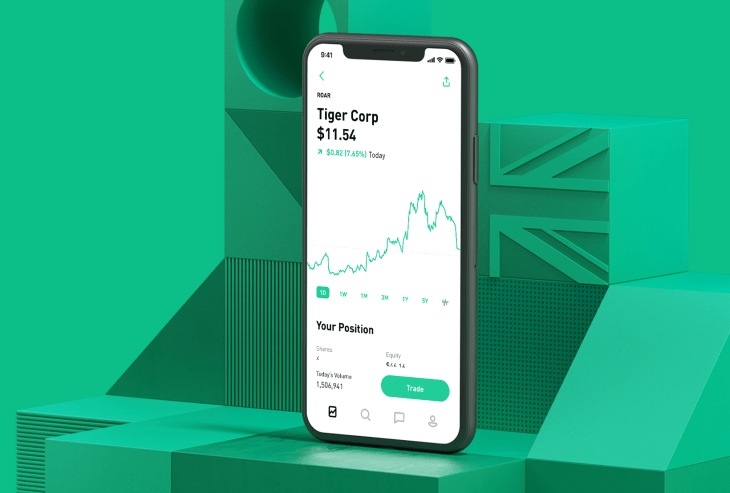
The problem(s) with Robinhood

Yes it’s easy.

Yes it’s intuitive.

Yes it’s designed to be visually beautiful.

But does that make it a better investing app? I say no.

Robinhood has a reported 10 million users. That is a lot of people, many of whom likely would not have started investing were it not for the unique approach taken by Robinhood. But the same features that make it seem attractive initially serve to stunt the financial growth of it’s users. In this post I will lay out why I feel this way.

  1. Ease of use

Limitations inherent in this “beauty over substance” approach actually weaken it’s ability to be a useful tool. Lately I’ve been checking the app a lot. This is one problem: ease of checking your daily progress. Or lack thereof these days! It stimulates day trading, i.e. bad decisions for you. The fact that my work-sponsored 401k is a massive pain to login to, check, make any changes, etc… decreases the likelihood that I jump in and make rash (i.e. stupid) decisions in the heat of the moment.

2. Clean design

The clean design looks really nice, but it lacks some of the detail you likely want. I want to know the expense ratio of the funds that may be worth considering. If one is 0.04 and another is 0.3 and they accomplish similar objectives, why would I choose to pay 7.5 times as much! We need to know this! Make this clear app dev people!

3. Daily updates

Daily updates on how your stock is doing via notifications. + Live graphs for the day + Instant deposits + ease of trades + second-by-second updates on your account balance as the market moves + the generally cartoonish nature of the app all push you toward short term thinking. What emphasis is there on buying and holding for the long term as experts recommend? (Not sales people, experts. Your broker may not have your absolute best interests at heart either consciously or unknowingly.)

4. Emphasis on individual stocks

Perhaps most significantly, the emphasis by default design is destined to direct users toward individual stocks! This means that the vast majority of users will have very poorly diversified portfolios. Remember, for now the option of fractional share investing is not available to anyone but the select few people who have been given early access. So I am stuck with a few of this stock and a handful of the other. Perhaps we can force ourselves to wisely branch out and buy a multitude of companies in a sector, but I am partial to believe that most of us probably chose to stick with simply buying more shares in the few companies we started with. This mean we pigeon-hole ourselves into extremely limited diversity and high risk. This design actually ensures that the vast majority of Robinhood investors get WORSE returns than if the emphasis was on low cost index funds. Remember, index funds are available on Robinhood, you just have to search them out.

5. Gamify the process

Also, the game-ifying of the app make it feel less significant. It feels a little more like a cheap app store game about investing than actually risking your literal hard earned dollars. If you’re like me and are a sucker for games, especially pseudo games that involve numbers, something like Cash Management waiting process is a little too intoxicating. For the unfamiliar, Robinhood is starting to dole out a debit card to a limited number of it’s users. When I first started using the service, I was number 1.2MM in line. Every day you’re allow to tap the screen up to 1000 times, which moves you “up in line”. Also, at somewhat random times you may take a massive leap in line, 10,000-40,000 positions in a day. Obviously another incentive they have for this is to allow any new signups that came from your referral link to move you up in line. I’ve not gotten any referrals so the impact of this on your place is unknown to me. This of course entices you to login daily, invite friends, and generally form a habit of visiting that peaceful minty-green app icon every day.

All of this is fine if you’re a bastion of self discipline. Perhaps you’re not like me and you’ve got ice water flowing through your veins. Perhaps you never cheat on a diet or miss a workout. Perhaps you always keep the promises you make to yourself. This whole post could be a list of complaints about an app that is perfectly neutral and I could be completely wrong. BUT. My guess is that you aren’t a Navy Seal with laser focus on whatever you set your mind to and you are subject to the temptations baked into this kind of design. Watching the market sway it’s hips back and forth like the motion of an expert salsa dancer may just hypnotize you into joining in this dangerous dance of daily trading.

Please don’t misinterpret this post as a binary bashing of a beautiful and generally beneficial app and service. These kinds of things aren’t able to be boiled down to “good” and “bad”….most of the time. (There may be some genuinely scammy or otherwise unethical investing apps and services out there that we legitimately need to avoid like the plague….err virus) I still think Robinhood is the path of least resistance to those that are new to investing. HOWEVER, the easiest path is rarely the best when it comes to adult life. It still overlooks many of the fundamental features I have come to believe are foundational for any financial friends to be able to finesse. Again, fractional shares. Yes, yes, they have the feature and are slowly rolling it out to a select number of users. But again, it’s not available to the public so you are more mentally tied to a stock price than an amount of money you’ve committed to investing and its growth or shrinkage based on percentages.

Also, the lack of IRA options is a bit staggering to me. The fact that we are forced to only operate within taxable accounts and are not able to access tax-advantaged accounts is a massive oversight. The average Robinhood user is younger than most of the investing populous as a whole. Likewise, we are prone to be earning less than the average investor and to have a longer time horizon for our investments to grow. Compound interest has been touted as a wonder of the world, and yet here we are being funneled into a short-term, poorly diversified corral of investing.

These reasons are why my favorite investing app is M1 Finance. It corrects all of these wrongs without creating obvious gaps that I miss. Even so, I find myself spending more time on Robinhood because of its ease of use and design features. However, if I had to delete an investing app TODAY and never use it again, sending all of the funds to another service…it would be Tastyworks. But right after that it would be Robinhood!

$2000 “Passive Income” experiment

Everyone loves the sound of earning money without having to spend any time or effort! What’s NOT to love?

Photo by Rebeca G Souza on Pexels.com

Lately there has been a massive uptick in the popularity of “passive income” related content and strategies. Of course the concept is intriguing but it should be met with healthy amounts of questions and skepticism.

  • If passive income is so easy, why don’t more people take advantage of it?
  • If we can “make money while you sleep”, shouldn’t everyone be doing this?
  • How realistic are the claims being made by these smooth talking, promise-slinging geniuses of all things money?
  • Is this the way rich people became rich?

If you pay attention and listen between the alluring and ever-hopeful promises of the passive income gurus you may begin to realize that this income isn’t quite as passive as the name implies. Generally people either need large sums of money to generate regular income and/or it takes additional work to generate this income. So…not really passive at all. Quite active actually.

Earning the money needed to investment is active. And a side job called “real estate rental property” is far from passive. Other options include selling a product online, making an online course, selling stock photography, affiliate marketing, YouTube ad revenue, peer to peer lending, vending machines, drop shipping, renting items you already own, crowdfunded real estate, and the list goes on. Do you see the common theme? Startup money + hard work= the possibility of income. To me, that’s just the bones of starting a business.

Startup money + hard work= the possibility of income. To me, that’s just the bones of starting a business.

-truth hurts

So what is actually passive?

If income is to be TRULY passive it needs to require ZERO time or effort on your part. If you want to input extra time to monitor your progress or contribute work to potentially add value, that’s optional. In my mind the best and most passive sources of income have to be from the stock market.

The stock market is a complex, moody beast of a thing but we can choose to make it more or less so. Indexed funds allow us to invest in a low cost and automatically well diversified group of companies or funds without having to get an MBA or understanding a business prospectus statement. But there are people who still love to pick their own stocks and insist they are successful at choosing the ones that net them great passive income.

The experiment:

So to save you the headache and to satisfy my own curiosity I am going to invest in both ways: indexed funds and individual stocks. Not only that, I am choosing to invest specifically in companies and funds that have a track record of paying regular dividends to their investors.

Dividends are a portion of the profit made by the company that they choose to send to their investors. Generally companies that choose to pay dividends make this a regular occurrence. The most common schedule is quarterly payments, but that can vary wildly.

People like to recommend their own way of thinking when it comes to picking “good” stocks. They decide by reading about the company, looking at financial statements, mimicking other investors, or my personal “favorite”: if you “know the product and like it”. PLEASE read into the sarcasm here. That’s my “favorite” strategy because its so completely silly. Whether or not a company makes a product you personally like as 1 lowly consumer really has ZERO bearing on whether it’s a worthwhile investment. (Yes Apple, Tesla, Netflix, Facebook, and others have skyrocketed in value. And yes if you’d invested in them early on that would have been great. But for those of us who are getting started investing and don’t want the kind of risk associated with one stock rising and falling in value, there are other options)

In contrast to this method of choosing companies 1-by-1 I will also be investing in a number of funds that are a massive variety of companies that have a great record of paying their investors regular dividends. The benefit of these kinds of funds over a single company is that they are spreading your money over dozens or hundreds of companies. So if a few losers don’t pay a dividend this quarter, have a terrible year, or go out of business, it doesn’t hurt very badly. In contrast, if you’re expertly chosen gamble on that one company you think is “cool” happens to not work out, there goes your whole investment.

You can probably accomplish your entire goal of a relatively safe and good performing dividend investment with just 1 fund. However, in an effort to be as diverse as possible to prove the point, I will invest in several different funds full of dividend paying companies.

These 2 strategies will likely have some overlap since the handful of companies I pick will likely be included in the big funds in the other half of the investment experiment. So it’s not meant to single them out as good or bad or to judge my ability to pick a winner. It’s more to show the possible swings in performance and risk you accept when picking a small number of companies vs letting a fund do that work for you.

The 2 $1000 bets:

To complete this experiment I am using $2000 total. $1000 will go into the handful of individual stocks that are picked based on popular opinion and their track record for paying dividends reliably in the past. The other $1000 will be invested in a small number of dividend index funds. That’s it. They get to sit and stew and we will watch the rise and fall of their value as well as the actual amount of “passive income” that is generated by each account.

Contender #1: Robinhood

For the individual stock account I am using Robinhood. It is a tremendously popular app for people to use when getting started investing and is geared toward picking individual stocks and monitoring them closely.

You now have a claim to a stock like Apple, Ford, or Facebook. In order to keep this claim to your stock, sign up and join Robinhood using my link.

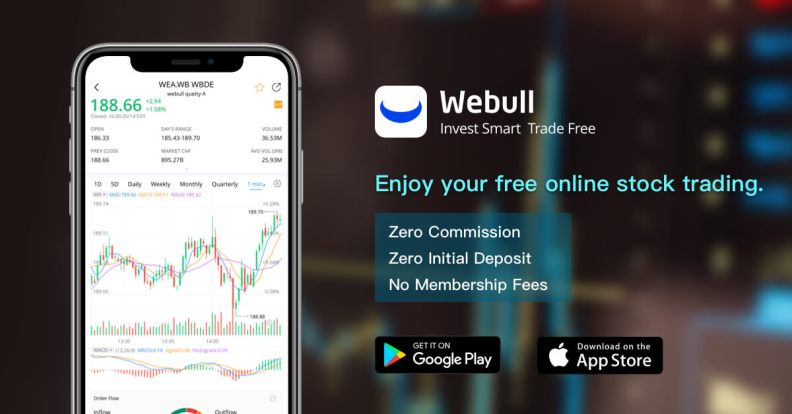
Contender #2: Webull

For the diversified index funds of companies I am using Webull. Webull is not nearly as popular as Robinhood but gives the user a TON of information about their investments. Far more than I ever want or need. But it’s impressive and if you’re wanting that kind of depth in your investment monitoring, Webull is the app for you. It also has a browser-based dashboard that shows a wealth of live updating detail and is guaranteed to help you feel like a stock broker in a movie scene!

Get 2 free stocks when you open and fund your account with Webull through my link:

For a more complete breakdown on what investing services I recommend and why, check out my investing page here!

Stay tuned for updates as the dividends roll in! I will post the breakdown of companies and funds as well as the exact dividends they paid!


Disclaimer: I am not a certified financial planner and hold no formal education or training in the field of investing or personal finances. Any and all information on this site is for entertainment purposes only and is not necessarily applicable to the reader’s personal situation and circumstances.