Needs, Save, Want Budget Format (revised)

Photo by Artem Beliaikin on Pexels.com

Everyone likes a quick simplification of something that otherwise requires a lot of thinking. A “rule of thumb”.

When it comes to planning what to do with your money, odd are that you’ve likely heard some recommendations floating around in articles, podcasts, videos, and the occasional blog post. Some of these recommendations are:

  • Save at least 10% of your income
  • Invest 15% of your income for retirement
  • Pay yourself first
  • 50/30/20 rule (Spend 50% on needs, spend 30% on wants, and save 20%)
  • Track your spending
  • Don’t buy fancy coffee
  • Automate your savings
  • Wait 7 days before buying anything
  • Follow a budget
  • Have an emergency fund
  • Don’t have an emergency fund, use credit cards or a HELOC
  • And plenty more
Photo by Suzy Hazelwood from Pexels

Turns out we need a rule of thumb to cut through the rules of thumb.

One of the more popular rules is the 50/30/20 budget. I want to destroy the rule. Here’s why.

Despite what I assume were good intentions when someone devised the 50/30/20 rule and the likely good intentions of everyone since then who have repeated it, I sincerely doubt it’s efficacy in the real world. In reality, saving 20% of your take home pay to cover everything from a rainy day or big purchase to retirement investments is not enough.

More importantly, justifying the expenditure of 30% of your pay on “wants” because it fits in an easily repeatable saying like 50/30/20 is in my opinion only serving to enable wasting money. Somehow many of the big voices in media only suggest investing 15% of our income. At that rate of saving, you would need to continue for 51 years before you could retire and have enough invested to cover your costs of living! 51 years! Reference this article by the infamous Mr. Money Moustache to see the math behind this claim:

Even if you started diligently following that advice at age 20, that means you have a 51 year career ahead of you! Better not relax and take your foot off the gas! Plan a wonderful 71st birthday party because that’s how old you will be when you can finally retire! MADNESS. I don’t know what your hopes and dreams are around working and retirement, but even a foggy and ill-defined view into my future doesn’t show a 71 year old Brendan hard at work at the same full time job!

Even if you somehow had enough cash savings to allocate all of the recommended 20% of the 50/30/20 rule directly to investments, it would STILL take 37 years to replace your average spending with investment income! This is believed to be “not bad” considering most people start working in their early 20’s and the retirement age is people’s early 60’s. But why is retirement age all the way into our 60’s? Because the government sets those dates for penalty-free withdrawals from our tax-advantaged retirement accounts? Or because it’s impossible to do otherwise? To be honest I have no idea. It feels like surrender to just accept 4 decades of work to one day have hope of achieving “work optional” status. This is something we need to force to change at a grassroots level.

My baseline proposal is to flip the 50/30/20 rule around and recommend spending 50% of income on needs, 20% or less on wants, and 30+% to save and invest.

My baseline proposal is to flip the 50/30/20 rule around and recommend spending 50% of income on needs, 20% or less on wants, and 30+% to save and invest. To regularly save cash for future purchases or to replenish an emergency fund that’s been tapped, we have to create a margin. 5-10% of income going to cash savings is likely needed to save for that next car, that home renovation project, that vacation, or a similar expense. These kinds of things are foreseeable, predictable, and are therefore “save-for-able”. Having the cash to pay for these kinds of things keeps us out of debt and in the long run easily saves tens of thousands of dollars. The fact that a large purchase is always around the corner means that we should perpetually be saving cash for these kinds of events. You can either make payments to yourself interest free or you can make payments to a lender and get absolutely destroyed by interest. I choose the former.

The common practice of taking out a home equity line of credit or second mortgage to pay for a big project or other expense seems especially appealing in 2020 because interest rates for this kind of loan are at record low levels. I am with you in feeling this temptation. I even called our mortgage broker to discuss refinancing to take advantage of these incredibly low rates. But the response I got back was basically, “Your rate is already so low and your mortgage balance is also so low, that I won’t write the loan and the banks likely won’t be interested in it.” Translation: we can’t make enough money off of you so we’ll move on to someone else who WILL make us a lot of money. (No hard feelings on the broker, the guy has to eat.) This is somehow a compliment and a rejection at the same time. Because we took out a 15-year mortgage 4 years and 1 month ago, we’ve aggressively paid down the principle on the loan. That’s just the way a 15 year mortgage works. In the same 4 year period we would have paid off far less of the loan balance and far more toward interest (i.e. making the banks richer) had we opted for the far more common 30 year mortgage. Anyway, all that to say, the only way the banks would be interested in allowing us to refinance would be if we did a massive 6-figure cash-out refinance to do something like fund a home renovation project. As a result they would make many thousands of dollars on us, just because we wanted it now and would not wait and do the same work over a period of years.
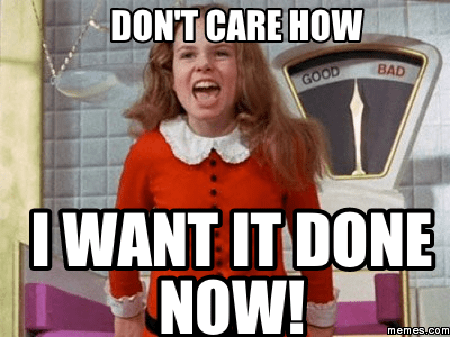
The other extraordinarily common way to get what we want RIGHT NOW is just to put it on a credit card. It’s truly amazing how common this is and how common it is for people to carry a balance on their credit cards. The average American carries $5,700 in credit card debt. The average interest rate on credit cards in America is about 17%. If someone with this “average” situation pays $150 per month on their credit card, it would take them 55 months to pay off the balance! Almost 5 years! That would also mean they paid an extra $2,541 in interest! That’s 44.6% more than that stuff should have cost! Those $200 earbuds? They actually cost $289. That $1100 phone? It actually cost $1590! And this is all assuming the credit card spending stopped and no additional charges were made! Most of us keep using the cards for the next emergency or the next impulse buy! The amount of money that credit card companies profit from our lack of saving and impulse control is truly staggering and depressing. Let’s just say it’s in the hundreds of billions of dollars. (In 2016 it was about $163 billion and odds are that number has only risen).

Especially if someone is already in debt using some of these methods (which aren’t even the worst or most predatory kinds of debt available), allocating at least 5-10% of all income to save and/or use for debt repayment is crucial. In fact, as part of the new 50/30/20 rule I’m proposing here, I think if someone has high interest debt, which I would classify as anything above 6%, the vast majority of that 30% number allocated toward saving and investing should be spent on debt repayment. If you are losing money at a high rate, you won’t dig yourself out of the hole by investing and hoping to earn it back at an even higher rate. Paying off that credit card balance that’s costing/losing you 20% interest is triage. Stop the bleeding! Until then, postpone investing and get the wounds stopped.

Paying off that credit card balance that’s costing/losing you 20% interest is triage.

After paying off that high interest debt, let’s say you’re saving that 30% total, with 5-10% of that going into a high yield savings account or CD ladder. You’re preparing for future expenses both expected and unexpected! Bazinga! You will avoid the debt woes mentioned above and will have ample cash saved. I agree with recommendations to have about 6 months of living expenses in cash, more if you have greater volatility in income levels or spending levels. I.e. you are paid on commission alone and have variable medical expenses etc… Or even if you just want to be prepared for anything and not have to think about going back into debt, having a larger cash emergency fund available is great.

The traditional 50/30/20 budget is oriented much more toward immediate satisfaction than my proposed swap. Planning to spend 80% of your money makes sense in the moment because there are SO many things to buy and so little money to buy them. I think it also serves to make people feel better about “only” saving and/or investing 20% when they could actually do considerably more if they set their mind to it. For higher earners or people with simpler lifestyles, it’s a relatively low bar. In my suggested 50/20/30 budget, spending 70% (or less) and saving or investing the other 30+% positions a persons finances with a hugely increased level of security and future hope.

The remaining 20-25% of that 30% total left after saving in cash should be allocated to investing. The reality is that many people are forced into involuntary retirement through job changes or medical challenges. Perhaps your company closes and you aren’t able to find a similar job in another company. Maybe you’re injured and can’t perform the physical duties your job called for. There are any number of ways this happens. Sometimes it’s not even something that happens to you specifically, but a choice you feel is right. Taking care of someone close to you make become a higher priority than work. Being financially secure could allow you to stop working or cut down the amount of work greatly to care for them. Only investing a small amount now does not allow those transitions to happen with any degree of smoothness.

But the fact is that over 47% of Americans aren’t investing at all, let alone to the degree recommended above. And less than 20% of Americans are saving for retirement specifically in 401k or IRA accounts. Since the 401k and IRA are tax-advantaged accounts and are the most popular ways to save for retirement, we can postulate that the vast majority of people simply aren’t prioritizing their retirement.

But the fact is that over 47% of Americans aren’t investing at all, let alone to the degree recommended above.

Looking at this issue objectively, I completely understand why this is the case. The realities of today and the next month are pressing. Retirement happening someday feels like an eternity away. It is both distant and vague. We know what we need this week to pay bills, buy a new fun thing, or eat at our favorite restaurant. We don’t know exactly what we need or even when we will need it in terms of retirement savings. Human nature is to focus more on the immediate payoff, so we do. And this is one of the main reasons (in my opinion) why we are in dire circumstances when it comes to most people’s personal finance situation and especially in the case of retirement savings.

Part of my motivation to both do this and encourage other people to do this is the potential for something to happen between now and “retirement age” that knocks us off our feet. I’ve known people personally and read numerous stories online about otherwise healthy, active, relatively young people being struck down with cancer, covid, accidents, or other unexpected events. These are catastrophic financially because not only is that person not working, but their partner is likely working less or not at all to take care of them and to top it all off, they are racking up obscene medical bills along the way! This is not a commentary on the American healthcare system, but we all know how crazy expensive these bills can be. No one has died, and in fact the expectation is for a slow but full recovery. Let’s look at a hypothetical example:

Let’s say you’ve been working on this flipped 50/20/30 plan for 10 years. You started at age 35 and now you’re 45. You have paid off your debt with the exception of your mortgage and have 7 months of living expenses saved in cash as an emergency fund. You also have $5,500 saved for a home repair you expect to happen in the next year. Solid work! Not only that, but you’ve been investing 25% of your income every year for the last 10 years and the occasional small pay raise at work has helped create quite a nice nest egg between your tax advantaged retirement accounts and a taxable brokerage account you opened on the side. The retirement accounts have about $125,000 in them total and the taxable brokerage account has about $20,000. Out of nowhere, you feel a tightness in your chest on the way to work. You make it there but walk inside only to feel worse. You call 911 and are taken to the hospital when you find out you’ve had a very mild heart attack. The doctors recommend spending 3 nights in the hospital for monitoring and tests then taking at least a month off work. During the second night, you have more chest pain and have yet another heart attack! The doctors rush you to surgery and implant a stint. You end up spending a total of 4 nights in the hospital.

Photo by Luan Rezende on Pexels.com

After that you’ll likely need regular checkups and daily medication to mitigate future problems. As a result you end up missing over a month of work, have $11,300 in medical bills, and now pay $267 per month for the prescription medication. Your old financial self would have been crushed by this. Missing over a month of income alone would have pushed you to visit the dealer of debt known as “credit card”, let alone the huge medical bills and increased living expense of the medications. You would have been paying off the balance of the new debts for years. Instead, you dip into your emergency fund to pay bills while you are away from work. It’s annoying but not a stress-inducing exercise. Then you negotiate a bit with the medical billing people and find out that not only can they reduce the cost of the bills by $1100 down to $10,200, but they can also break up the cost into an interest free 6 month payment plan for you. Nice. You use the cash in your emergency fund and the $5,500 earmarked for home repairs to fairly easily pay off the entire balance in the 6 months. You end up with 2.5 months of living expenses remaining in cash in your high yield savings account and begin to quickly replenish it now that the bills are paid. Your credit card remains at a $0 balance since it wasn’t needed. Before long, you’ve gotten the cash savings back up to the previous levels and didn’t even need to touch the money you had invested, but knew if you needed to you could pull the $20k out of the taxable account at a moments notice. The biggest difference throughout the whole scenario was your lack of stress brought on by the financial burden of this. You had a plan and were not very burdened at all. This left you with more mental and emotional bandwidth to focus on your physical health and recovery. Quite the win-win!

This is the kind of real life in-between scenario that I expect to happen to many if not most of us. The point of saving and investing far more than is common isn’t to “get rich” or even to have a plush retirement. Despite current popularity in early retirement, I would argue it’s not even about that! (Though the potential of work becoming optional before all of my hair turns grey does sound pretty awesome.) It’s about the peace of mind all along the way. Getting away from the regular stress of debt and cash shortages along with a total lack of preparation for the future is priceless. It frees us up to spend more of our limited time and attention on the people around us. It prevents big nasty financial catastrophes when unexpected costly events unfold. It prepares the generation after us to change the “norm” to something much better. Our kids watch us, including what stresses us out and what causes fights. Let’s pave a new road toward financial security and health for ourselves and for them!


Running 1 Mile in My Kitchen!

https://youtu.be/E56HiTnk7Jw

Why in the world would anyone run indoors without being on a treadmill?! That was my thought process too. Until last night. When I ran a mile inside my house, in the kitchen.

Lately, running outside has been part of my every day routine. I’m wrapping up a 30-Day Challenge to run every single day. People have been doing this long before me, with “run streaks” being an actual thing. People go hundreds and even thousands of days without missing a run. Typically the minimum run distance for it to “count” is 1 mile. This seems easy enough, but then you realize there are busy days, travel days, sick days, and many others that pose incredible obstacles to overcome! These people are crazy! And yesterday I took a small step into their ranks.

Photo by Visually Us from Pexels

Running outside, on trails, preferably in the forest is my ideal. Its beautiful, ever-changing, you get to be moving through space, there are animals and weather and all kinds of things to encounter, and you can go as fast or as slow as you prefer. Its wonderful! Running inside my kitchen is nearly the opposite of this. It’s ok looking, never-changing, you still get to be moving through space but it doesn’t really feel like it, there are no animals, no weather, no things to encounter besides maybe the fridge and dining room table, and your speed is severely limited! This was the element that was actually the toughest, the speed limitations.

So why did this happen!?

Well, we have a baby. And the baby is not able to be safely left at home alone. No one else was home with me and baby and it was getting late. Knowing I would not allow my last 26 days straight of run streak go down the drain, something had to happen. Then it hit me! People have been running indoors more than ever because of the global pandemic! Time for me to give it a shot. This way the baby and baby’s monitor are within reach, plus I get to accomplish the goal. Win-win!

So I set about finding the longest area of our house, measuring off a distance, marking it off on the floor with blue painters tape, and getting my running shoes on! The distance available for running was only 20 feet. A full mile is 5,280 feet. So that meant that I would have to cover the tiny distance 264 times. Back and forth back and forth! I started the camera to record the event for a YouTube video (which can be found here: https://youtu.be/E56HiTnk7Jw) and set off!

Initially it felt easy, relatively fast, and was nice and cool to be indoors! After about 100 reps back and forth along the path, not so much. After 200 I was actually getting tired and sweaty! This was a surprise since I somehow expected to feel comfortable and cool the entire time. Before long it was already done!

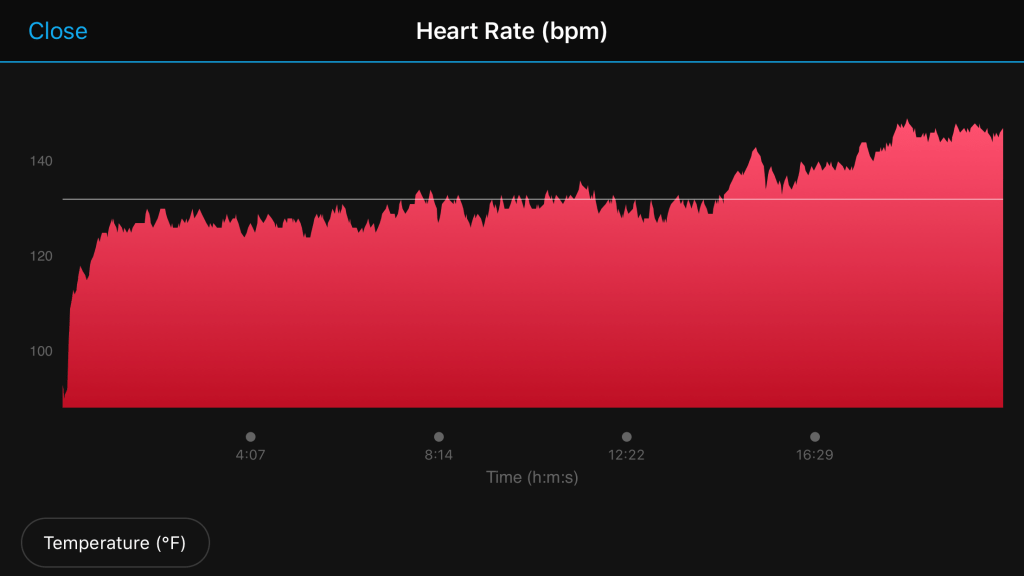
20 minutes and 36 seconds. My first, best, and only indoor mile running Personal Record! Ha! My heartrate was definitely lower than a normal outdoor run. I think that’s due to the fact that 20 feet is not long enough to get up to any kind of significant speed or momentum. The overall exertion level remains low. It was tougher on my feet and ankles than a normal run though. Or at least different. Changing directions 262 times (because the first and last rep don’t require a change of direction) was essentially a lot of starting and stopping. Writing this post the morning after, I notice my feet are actually a little sore! Interesting!

Heart rate is lower than a normal outdoor run.

Would I recommend an indoor (non-treadmill) run? Definitely not! But in a pinch, it works!!

Opportunity cost of buying that cool new thing

Choices, choices.

Recently had a buddy recommend I get a Nintendo Switch to be able to play games with him online. Harmless invitation. Friendly. But this is the rationale/dialogue that went through my head:

  • Hmmm what’s a switch cost?
  • $200?
  • I’d rather invest that.
  • Actually I bet it’s a lot more than $200.
  • What could that amount to after 20 years!? I bet its a ton.
  • Yeah I’ll invest the money instead.
A costly mistress

Fact checking: Nintendo Switch $299 from Nintendo’s website or this snazzy bundle from Amazon with the docking station, Mario Kart, Animal Crossing (The Essentials! duh!) etc… is almost $600 at time of writing!

https://amzn.to/332FWVX

Yowza!

What IS the real opportunity cost of $600 invested? I would likely play the switch for the next 5 years, then it would be forgotten in a drawer somewhere.

If we invested $600 in well diversified stocks through an index fund and got a return of 7%, it would be worth $841. That would be nice to have in 5 years instead of an old video game system….

Investing the $600 instead of spending it (5 Years)

 start principalstart balanceinterestend balanceend principal
1$600.00$600.00$42.00$642.00$600.00
2$600.00$642.00$44.93$686.94$600.00
3$600.00$686.94$48.09$735.03$600.00
4$600.00$735.03$51.45$786.48$600.00
5$600.00$786.48$55.05$841.53$600.00
5 years @ 7% interest growth

But that’s not the whole story. Because after 5 years the Switch would probably be worth some money, but not a lot. Lets say $150. So the net difference is $841-150= $691. Even so, I doubt we would actually sell it. Most things in life we buy and keep until they have very little value remaining or keep them until they stop functioning. Let’s calculate that more realistic scenario.

“Keeping the Switch forever” Scenario

Purchase price $600

Value after 20 years: $0-$50

Net difference: ($600)

Yes the Switch added a little entertainment benefit to our lives, but realistically we already are saturated with possible sources of entertainment. Just Youtube, Netflix, Amazon Prime Video, HBO Max, and Hulu provide so much content that keeping up with your favorite 2-3 shows on each platform is basically a part time job! We are in no way lacking in forms or amount of available entertainment methods.

What would happen if we invested that same $600 for the same 20 year period? Even without opening the calculator.net Investment Calculator, I can tell you 2 things.

  1. We would have more time available to do other things. Buying new toys automatically invites a Time Vampire into your home. It is a hungry vampire and it even has the strength of sunk costs to empower it. We think that because we just bought this new thing that we “should use it”. And we do. That time can never be returned.
  2. We would have more money if we invested than if we spent it. This one is obvious and you can see the trend here, but it’s still worth acknowledging out loud. Do you/do we want another thing taking up space in our lives and in our drawers? Or do we want to employ our dollars to go to work for us?

Ok now it’s time for the Investement Calculator. This one is simple and I find myself coming back to it. https://www.calculator.net/investment-calculator.html

Investing the $600 instead of spending it (20 years)

 start principalstart balanceinterestend balanceend principal
1$600.00$600.00$42.00$642.00$600.00
2$600.00$642.00$44.93$686.94$600.00
3$600.00$686.94$48.09$735.03$600.00
4$600.00$735.03$51.45$786.48$600.00
5$600.00$786.48$55.05$841.53$600.00
6$600.00$841.53$58.91$900.44$600.00
7$600.00$900.44$63.06$963.47$600.00
8$600.00$963.47$67.45$1,030.91$600.00
9$600.00$1,030.91$72.17$1,103.08$600.00
10$600.00$1,103.08$77.22$1,180.29$600.00
11$600.00$1,180.29$82.61$1,262.91$600.00
12$600.00$1,262.91$88.39$1,351.31$600.00
13$600.00$1,351.31$94.58$1,445.91$600.00
14$600.00$1,445.91$101.21$1,547.12$600.00
15$600.00$1,547.12$108.32$1,655.42$600.00
16$600.00$1,655.42$115.88$1,771.30$600.00
17$600.00$1,771.30$124.01$1,895.29$600.00
18$600.00$1,895.29$132.67$2,027.96$600.00
19$600.00$2,027.96$141.96$2,169.92$600.00
20$600.00$2,169.92$151.90$2,321.81$600.00
20 years, no additional money invested, 7% return

Well lookie here! We are at $2,321! Ok, ok that’s not a ton of money. I agree. We won’t be impulse buying a Maserati with it. But let’s compare the net difference again.

Purchase price: $600

Value after 20 years: $2,321

Net Difference: +$1,721

Toys are fun. Money is more fun.

In other words, we were paid over $1700 just to not spend money on a toy we don’t need. I’m not an advocate for minimalism or abstaining from good and fun things that cost money. Almost the opposite actually. But this kind of long-term thinking helps me actually calculate the cost of our decisions.

Spending $600 isn’t as simple as: “Do I want this object enough to spend $600 on it.” It’s more like: “Is this object so wonderful that I am happy to give up $2,321 to play with it for a few years?”

This doesn’t even factor in the potential implications for early retirement. We aren’t focused on retiring as early as possible, but I AM intrigued by the possibility. In 20 years, having another $2300 invested means we could count on having an additional $92 per year or $7.67 per month for the rest of all time! That’s not a ton of money but it would pay for a couple nice coffees every month during our retirement. If we abstained from 3 more random $600 purchases and had something like $30 per month, we could have a fancy coffee every week for the rest of all time for “free”!

(For reference this math is based on the 4% rule. For more info just Google 4% rule or Trinity Study)

Choose wisely. Move forward! Save lots. Invest often!

If you like personal finance/investing/financial independence and podcasts, here’s mine! : https://anchor.fm/brendan886

Or if you prefer video, here’s my YouTube channel! :https://www.youtube.com/channel/UCVaO3-9dDkesDFAFrvqvcFg/

Ease is a greater threat to progress than hardship

I love when things come easily.

Growing up, school was fairly easy. Getting along with other people was easy. Staying alive was easy! Achieving a level of success academically and athletically was fairly easy. (Small town. Medium fish in a little pond!)

Even now I shy away from things that are outside my areas of proficiency. It just takes so much time to make any progress when you’re not naturally talented at something.

I would love to do woodworking…in theory…probably. It is captivating to watch someone really skilled complete a beautiful project with wood. I dare you to enter the rabbit hole of YouTube by looking up woodworking projects. Guys like FourEyesFurniture and JayWoodworking come to mind right off the top of my head. And there are tons more! But in reality it takes years of practice and patience to develop even mediocre skills. You’ve got to learn about the tools, the wood, the techniques, the glues, preparing a design, and more! This is not something you pick up over the course of a weekend or a couple months. As a result, I rarely do anything resembling woodworking. It requires a level of commitment and effort and patience that I am not willing to give.

I think we come to that conclusion too quickly in general. Especially when it comes to exercise and managing our money. We accept a relatively low level of commitment, fail to see the results we desire, and decide it’s too much so we quit. Somehow, like me, we mentally set a level of expected effort required for a level of expected result. It’s arbitrarily plucked out of thin air, probably based on unrealistic factors, and yet we allow it to determine our whole outcome.

I have no idea how we have become so accustomed to relative ease. It’s not even worth guessing because our stories likely differ. But the habits of starting something with good intention and a lack of grit run rampant in first-world cultures. This of course is not the story of everyone, there are people who have loads of grit and push through any number of challenges to reach a goal. If you are one of those people, congratulations, and please write me a message! You are a unicorn of discipline and strength and the rest of us can learn from you. Heck you should probably start a blog or YouTube channel to tell your story.

Unicorn of Discipline and Strength

The extra-deceptive nature of this weak “attempt-briefly-then-give-up” routine is that we likely are telling ourselves a different story in the thick of the “attempt” phase. I do this! I don’t pause to question my commitment or grit for even a moment. I tell myself things like, “This is something I am going to DO! Period. Lets go and do more of it. Lets go buy all the gear and the books and the accessories needed to really get fast and proficient at the activity. Lets jump in with both feet and not look back.”

I’ve jumped, I’ve bought, I’ve not looked back! But the reality is more like this: I do some “research” online by watching incredibly skilled people do their activity with poise and excellence and want to mimic that. Totally overlooking the concept of many years of struggle and hard work that got them to that point, I decide on a subconscious level of expectation for both commitment and progress. “Hmmm, if I buy XYZ equipment and watch a few more videos, I bet I can do that same thing! Lets do it! I should be able to do something like that in 2-3 attempts!” Do you see the gross oversight!?

Maybe you’re like me and just gloss over the most important part: putting in the time and accepting failure as a teacher, not a deterrent. It’s the hardship that forges us into the instrument we want to become, not the easy successes. It’s all the terrible woodworking projects these experts online made for years before that showed them how far they had to go! We need to make hundreds of mistakes to notice what we need to improve on. We need to make a table like Michael Scott in The Office and live with it for a while, notice it’s ridiculous, then try and make a better one!

Michael Scott’s woodworking skill (or lack thereof)

It can be a little embarrassing along the way. The “learning curve” is awkward by nature. Especially if you’re doing it in the presence of people who are able to identify your faults and expect better from you. But it’s 2020. The world is full of people who criticize first and think later. They are probably just like us and overlook the long arduous process of learning through hardship. They just expect perfection or at least excellence because that is what they see most. It’s the norm. A TV show/podcast/etc… that is done badly and/or is about people who aren’t skilled does not gain popularity.

Maybe our stumbling, slow, modest, almost imperceptible progress can help change that expectation. Through our vulnerability and passion for the activity, we can show that we aren’t good at this yet but are able to enjoy the growth and struggle associated with whatever stage we are in. Maybe we can’t change the expectation, but either way we have to face the struggles head-on to grow and push through them.

I don’t plan to make a valiant effort toward woodworking mastery. That ship has largely sailed. But the lesson still stands. 20% commitment paired with a bunch of purchases can never amount to proficiency or excellence. The only way to arrive at those levels is through the path of hardship. For now I am choosing other hard things to attempt to foster growth in general.

These current growth-practices include:

  • Running every day for 30 days.
  • Making a new YouTube video every day for 30 days.
  • Reading 2-4 books per month (audio books of course).
  • Setting money saving/investing goals.
  • Budgeting: tracking every single thing we spend, save, invest, or give.
  • Planning the next 30 day exercise challenge. (If you have ideas, send them my way!)
  • Tracking the days I successfully refuse junk food.
  • Tracking the screen time I spend on my phone each day and slowly working towards decreasing it.
  • Setting professional goals for advancement and taking small steps every week toward them.
  • And many more. You should see my spreadsheets! Ha!

How are you engaging with the hardship, the struggle, the friction that is required for growth?

Are you stuck in the cycle of “20% commitment paired with a bunch of purchases”? Take a step back and really think about the last couple good habits or hobbies you have tried and failed to adopt. What exactly happened? Why did you stop? Are there tiny little steps you can take in the right direction to re-start that journey?

If you’d like to think about this topic more I just made another YouTube video about it:

Introducing: Brendan Fitness and Money Podcast!

Robinhood's Credit Card Just Got Even Better (Somehow) Brendan Evan

In someways, I hate to say it, but this is the best credit card I've ever used and it just got better. The only problem is the card is hard to get because you have to be on the waitlist for so long. Info on the card here: https://robinhood.com/creditcard/ Sign up for Robinhood with my link and we'll both pick our own gift stock 🎁 https://join.robinhood.com/brendab533
  1. Robinhood's Credit Card Just Got Even Better (Somehow)
  2. The Forgotten Acorns Investing Feature You Need to Use
  3. Acorns Investing Returns: Mistake or Genius?
  4. Growth through difficulty
  5. First Ultramarathon: An absurd goal
Photo by Tommy Lopez from Pexels

Here it is! The long awaited, much anticipated debut of my podcast!! Woo hooo! Ok, no one was waiting or anticipating anything. Ha! Podcasting is such a handy way to ingest information that I felt like it was worth making some content here as well. Listening while driving, running, doing housework, showering, etc… is such an easy way to hack everyday life and increase your productivity. It seems simple to make a podcast, but to do it well takes real effort and craft skills. I don’t have those yet! But I will continue to practice and get better over time!

Topics: This podcast will be about the same general topics that I write about here on this blog and talk about on my Youtube channel: sustainable and healthy ways to improve your fitness and personal finances. These areas of life both require slow, disciplined, sustained action over the course of years to really be successful. I think the nature of that progress being so slow and taking so long is what makes it so difficult. Plus, these are both relatively personal endeavors. We can easily feel ashamed at our lack of progress, extra love handles, or personal loan debt. Instead of stopping there I want us all to be able to learn ways to turn that habit train around and start moving in the right direction. My biggest hope is to help you along that journey!

My Youtube channel:
https://www.youtube.com/channel/UCVaO3-9dDkesDFAFrvqvcFg?view_as=subscriber?sub_confirmation=1

Instagram:
https://www.instagram.com/brendan_fitnessandmoney/

The 1% rule in rental real estate

Rules of thumb are a nice shortcut to make a the bulk of a decision quickly and simply.

Photo by Skitterphoto on Pexels.com

To know whether or not something as complex as a rental property is worth the risk involves a LOT of factors. This is both the time a rule of thumb is useful and to be viewed with caution.

You may or may not have heard of the 1% rule before but it’s fairlly simple and fairly common, but onoy among real estate investors. The 1% rule states that for a purchase to be considered, the rental rate (per month) of the property should be equal to or greater than 1% of the puchase price. Stay with me! That may feel complicated but it’s really not. Lets look at an example then review it again:

Purchase Price: $200,000

Rental Income: $2,000 (per month)

Rule: 1% achieved!

So this property meets the 1% rule right on the nose. This is rare. More often than not the rule is broken by a price that is too high relative to the rental rate. Where I live in Arizona, rental rates are rarely equal to 1% of the purchase price. A home selling for about $350,000 would likely only rent for about $1800-$2400 per month. This is more like a 0.5-0.7% rule.

So why does this rule “work” at all? Aren’t there a ton of factors to consider like location, how hot the market is, interest rates, property management, the condition of the home, how many bedrooms and bathrooms there are, what the mortgage on the property costs, utilities, THE RENTERS! Yes, those are all big considerations. The 1% attempts to encompass all of that at least as a first checkpoint. It’s easy enough math to do in your head and helps you to know the property is definitely worth considering.

Our home for another example, is worth somewhere between $325,000-$350,000. (Not in it’s current state because I have about 4 projects started and not yet finished. Chaos. Tools and material and bits and pieces EVERYWHERE.) So for it to meet the 1% rule, it would need to rent for somewhere in the realm of $3,250-3,500 per month.

If you’re like me, this prompts a number of questions, all based around the one most important one: Is this enough to make me a profit? Here are the questions that flow through my mind. What is the mortgage payment? Who pays for utilities? How much are taxes again? How much should we set aside for incidentals? Etc… Because renting for over $3k/mo really feels like a lot. That alone is double our monthly mortgage payment! But depending on those other factors, it may not be as profitable as it seems. I would expect the bulk of the utilities to be taken over by any would-be renters. But something like pool care or landscaping should be handled by the landlord, in this case, me! I don’t want the yard, trees, and pool to get neglected by a renter trying to save a few bucks and end up becoming my problem anyway. So that is about $200/mo off the top.

Let’s keep going with this example and talk through some of the numbers:

1% Rule Monthly Rental (gross): $3,250

Landscaping and pool maintenance: -$200/mo

Remaining rent: $3,050

What else is a factor? How about insurance. The average homeowners insurance is around $830/ year but ours is higher at this time. Let’s call it $1100. Apparently landlord insurance is 15-20% more than insurance for your primary residence, so lets forecast $1,320. $1,320/12= $110 per month.

Remaining rent: $2,940

I would never want to personally manage a rental unless the renter was a family member, so we need to factor in the costs of property management too. I have heard a range of costs to factor for PM. Anything between $125/month to 6% of gross rent. 6% of $3,250 would be $195. Lets continue with our conservative figures and call it $200/month.

Remaining rent: $2,740

Mortgage costs are likely the biggest single costs for any property. Unless it’s paid off! But our house isn’t, and as far as I understand, the intent of the 1% rule is to encompass the costs of financing through a mortgage. We currently have a 15-year mortgage so our payment is higher than average. We chose this so we would be force to essentially make an extra principle payment and thereby get out of debt sooner. This is probably even less common in rental real estate because so much of the concern is around cash flow. Cash flow meaning: as much difference between income and costs as possible. If this number is high, odds are you will be making money and more able to keep the property. We could refinance our 15 year mortgage to a 30-year mortgage and massively increase the cash flow. By now we have paid off almost 1/3 of the total balance, so the remaining $127k or so would make for a minuscule monthly mortgage payment. (For the sake of the conversation, a $127,000 mortgage financed for 30 years at a 3.91% interest rate would be $600/mo). As tempting as massive cash flow is, I continue to factor my own financial projections as conservatively as possible. For us to be able to move and rent this house, we would need to be living somewhere else, which means we would have bought another place. The monthly cash flow from this home on a 30-year mortgage would be great, but the crazy cash flow once paid off would be amazing. So let’s do the math with our current mortgage payment. It’s about $1500/mo.

Remaining rent: $1,240

We’re still in a strong position with well over $1,000 left every month. I’m sure there are regular expenses I have overlooked, so as one more category we will add: “small thing(s) Brendan overlooked” for another $150/month.

Remaining rent: $1,090

One of the most opinionated factors to consider remains: capital expenditures. If you want to sound like a guru, use industry terms like “cap ex”. These are the occasional repairs and costs that pop up as part of normal property ownership. Our AC unit is older than I am. It’s bound to go soon. Our plumbing system is made from cast iron (thanks 1970’s construction trends) and is slowly rotting away to nothing. It will need to be replaced in the next 5-10 years. (This hurts even to type in this hypothetical scenario!) Our roof is less than 10 years old but already is missing a few shingles and needs repairs…now! Shoot I need to call a roofer! Our pool is surrounded with “cool deck” which is chipping, cracking, and coming apart. It likely needs refinishing in the next 5 years. The list goes on. These are all expenses we sort of can expect, but don’t have a way to predict perfectly. And there are still others that are lurking and will pop up when we least expect them. For all of these unfortunate but common realities, we need to budget for capital expenditures. How much? Well we basically have to list out the items we know about and how long we think they will last and divide their replacement cost by that amount of time. Then we know how much to factor in between now and then. Confused? Don’t worry, here’s a handy chart!

ItemTotal CostLifespan (yrs)Cost/YearCost/Mo
AC unit$4,0005$800$67
Plumbing system$10,0007$1430$119
Roof$4001$400$33
Pool deck$4,0005$800$67
Water heater/etc..$5005$100$8
Total$18,900$3530$294
Capital Expenditure planning

All of those costs and timelines are “best guess”. Since I work full time in construction, I feel a little more confident in my estimates, but it’s best to ask pro’s what their normal range of cost would be. Overall the cost is going to be at least $294/month, and it’s probably wise to factor more. This is all of the known and foreseen expenses. EVERYTHING ELSE is not factored in. I would want at least $200-300/mo for incidentals. Again, on the conservative side, we will total this as $294+$300= $600/month

Remaining rent: $490

The next factor that we might often overlook through sheer optimism and lack of experience is vacancy. I never considered this until recent years and the repeated advising of people wiser and more experienced than me! There is virtually no way you will have 100% rental rates. Even if your rental market is hot, really hot, hotter than the sun, you will need some downtime to clean up, repair, or fix anything that’s broken between tenants. A typical factor to consider for vacancy is 10% The average has been closer to 7% nationwide and it varies depending on your area and your particular property. If we lean on the conservative side and plan for 10% vacancy, that means for about 1 month per year we will be getting zero rental income. So one of those sweet $3,250 payments is gone! Poof! If we plan on that and divide $3,250/12 months= $271 per month. Even though this isn’t a “cost”, it’s revenue that is gone and needs to be planned for.

Remaining rent: $219

Wow, how far the mighty have fallen! When you first look at the rental rates by way of the 1% rule it seems like you are absolutely guaranteed to make a ton of money! Yet, after factoring in all of the expenses and forethought needed to actually remain profitable over time, we would only be making $219/month. Now don’t get me wrong. I would love to clear $219 every month after covering every conceivable expense!

But here’s the rub: I’ve NEVER found a property that meets the 1% rule! There are a lot of people who take real estate investing much more seriously than I do and are constantly shopping. Odds are, whatever 1% rule deals that exist are snapped up and purchased before I ever stumble across them. However, the point still stands. These properties are not easy to find and often require the sweat equity and/or cash on your part to take them up to that level of rent. In fact in the market where we live I think this is almost mandatory to get anywhere close to the 1% rule.

The implication I am trying to make here is that just because you found a property that “cash flows” over and above the cost of the mortgage doesn’t make it a profitable investment. If the mortgage payment is $1500 and rent is $1900, you aren’t necessarily making $400/month. Remember to think about all the other costs that come along with owning physical property. As the old saying goes, “You make your money when you buy it”. (Implying that if you buy real estate cheaply enough, the rest of the math works out.)

Do you have any rental real estate?

Do you know someone with a rental?

What do you or they consider when buying a rental property?

Have you heard any horror stories around rental properties? (I feel like everyone knows someone who got burned and now vows never to do anything with real estate again!)

What do you think about real estate investing?

Abundance Vs Scarcity: Mindset is everything

The old way of comparing of a “glass half full” vs a “glass half empty” is a cheap and annoying way of explaining optimism vs pessimism. It’s nice and simple, but reality is not nice or simple. I think that we often treat our mindset as a fixed entity like gravity or aging. We can’t escape it, it’s just the way we are programmed and the lens through which we view life. FALSE! We CAN change it. We can change it whenever we want.

In recent and not so recent history, this idea of changing our mindset to one of optimistic abundance has been infectious. Napoleon Hill wrote books and gave speeches in the 1930’s and 40’s about this very topic. Since then a virtual explosion of popular books have become bestsellers. The Secret started the real snowball and since then there have been a slew of successful self-help books claiming you just have to believe that you are worthwhile, successful, and whatever else seems attractive to you….and those things will manifest themselves in your life as if by magic! How convenient! Like some cosmic mind-reading genie just slowly delivering my deepest wishes to my life like an Amazon package.

By and large I think this is complete and utter falsehood. But the inputs are not. The decision to change your own mindset to one of hope, optimism, and abundance has been one of the most powerful shifts in the last 10 years of my life. It’s not because the cosmic genie delivered good things to me. It’s because the things already in front of me began to take on different meanings and I began to act differently.

The alternative to abundance thinking is scarcity thinking. Along those same lines are pessimism, finite thinking, victim-hood, and excuses. Blaming outside forces for the bad things in your life is toxic. And expecting good things in life to happen to you just because you think about them or made a nice vision board for your closet is actually quite similar thinking. Either way, you are expecting something else to meet your needs and change your circumstances to suit your taste.

I want to argue for a shift in mindset as a beneficial and necessary practice long before any circumstances change. Please do not read this as accepting rose colored glasses as the new norm and just pretending like everything is great. Divorcing reality is not the aim and it is obviously going to create more problems than it solves. Acknowledging your feelings of pain, suffering, anger, hurt, or disappointment are still allowed and encouraged. But they aren’t the theme any more. The gap between what you imagine would make you happy and where you stand today is no longer the focus. The things you don’t have are not the song playing in the background of your day. Let’s get into it.

  • An abundance mindset welcomes challenge.
    • A scarcity mindset holds on to the comfort of staying comfortable.
  • An abundance mindset accepts failure as a means to learn.
    • A scarcity mindset is afraid of failing and avoids it by not acting in the first place.
  • An abundance mindset seeks growth.
    • A scarcity mindset isn’t even concerned with growth.
  • An abundance mindset asks questions.
    • A scarcity mindset states excuses.
  • An abundance mindset uses fear as a motivator.
    • A scarcity mindset is tied down by fear.
  • An abundance mindset keeps a person moving, even if very slowly.
    • A scarcity mindset keeps a person stagnant.
  • An abundance mindset focuses on what could happen, and what is possible.
    • A scarcity mindset focuses on “can’t’s”, “don’t’s”, and “won’t’s”.
  • An abundance mindset is more open to the unknown and the accompanying discomfort.
    • A scarcity mindset is locked into the known and comfort of the familiar.
  • An abundance mindset holds ideas open-handed and accepts new ways of thinking.
    • A scarcity mindset grips the same old ideas and ways of thinking with rigidity.
  • An abundance mindset is willing to break away from the norms of the social group to do something new, different, and “unusual”.
    • A scarcity mindset accepts social norms as the allowable boundary and mirrors what everyone else is doing.
  • An abundance mindset is willing to risk and give.
    • A scarcity mindset hoards what is in hand.
  • An abundance mindset is courageous.
    • A scarcity mindset is cowardly.
  • An abundance mindset takes ownership.
    • A scarcity mindset blames.
  • An abundance mindset acts before anyone can comment on it and despite criticism.
    • A scarcity mindset waits for permission or approval.
  • An abundance mindset innovates.
    • A scarcity mindset repeats what has been done before.

I feel like I can be critical of the scarcity/victim mindset because that is the way I thought for the bulk of my life. The interesting and counterintuitive thing here is that despite the scarcity mindset I held, I was also eternally optimistic. It seems like these 2 things are at odds and couldn’t coexist, but that is faulty thinking. We have to accept the nuance and variability of the way we think. We have been trained to process in different ways by family, friends, teachers, coaches, leaders, bosses, coworkers, entertainment, and our own innate bend on life. All of that mixes together to form complex cocktails of processing power. Be slow to label yourself as one or other of….anything.

Remember, this is not totally binary. We aren’t 100% in one camp or the other. Odds are good that you will be a gradient of the two. Some situations may trigger one form of thinking. It’s an interesting experiment to observe in yourself once you see the mindsets for what they are. Watch how you react to good or bad things happening. What how your parents or siblings react. Watch how your spouse reacts. We all betray our philosophies of thought in our language and communication methods.

As I mentioned, growing up I was very optimistic. In fact a way that I learned to cope with difficulties was to point out the “bright side” or the silver lining. Well, that sucks that your car was totaled, but at least you get to go buy a new car now! (Not helpful) Despite the perpetual optimism and positivity, I also held onto an underlying rip current of victim-thinking. It was much more subtle and sinister than I realized until very recently. Labeling things as out of my control, something I didn’t know how to do, or as “just the way it is” polluted my thinking. If I’m honest this was behavior I accepted from my social groups growing up. Seeing “those” people as successful was like watching lightning strike. An amazing natural phenomenon that you could only sit back and observe. The optimism even contributed to the scarcity thinking in a way, because we would work to accept everything as good or decent or worthwhile. Thinking everything is good seems positive, but in reality it doesn’t label anything inferior as such. You can’t identify areas of opportunity and grow them. You can’t set a goal to change things because why do they need changing at all? They are already good. As the famous saying goes, “Good is the enemy of great”.

Finally, after 31 years of living this way I began to realize that the most successful people in the world don’t just happen into their success. The best athletes train immensely hard, optimize their lives around their craft, and do everything possible to be the best. Entrepreneurs work day and night to get their new company off the ground and find ways to force it into existence. Virtually anyone who has accomplished something noteworthy, impressive, interesting, or difficult has a work ethic that dwarfs my own. Somehow the concept that I alone am standing in my own way never occurred to me. I alone choose NOT to work on that side business. I alone choose to stop working out. I alone chose too eat unhealthy food. I alone choose to stay up too late on my phone instead of getting the rest I need to perform at my best. I alone can choose to reverse those habits and start opting for better inputs. No one has a gun to my head and is telling me I have to do or not do anything. At most, perceived (not overt, outspoken) social pressure may shift my mindset. That’s it! Who is here to stop me but myself?! No one! Once that reality started to sink it, a lot of things changed.

I realized that if I wanted to be more effective at work and have the potential to advance professionally, I needed to change the inputs. There was no use waiting for a supervisor to notice the work I did well and hope that sometime that might amount to a promotion, raise, etc… That’s not a strategy. That’s insanity. Keeping the same inputs and expecting a different result. Instead, I chose to work harder than I ever had before. I was focused and driven to get everything done as quickly and accurately as possible. Work tasks got demolished as soon as they hit my desk. I was even more focused and driven than my boss. He had to quicken his pace to keep up. Emotionally there was a big shift too. Before, I was open to socializing with coworkers and looked for ways to bring up common topics and chat. Now, I only held conversations that added value and kept socializing to a sentence or two. My habit before was to mentally comment on the times that I was “bored” and wanted things to change. I would expect other people to bring me things to do, tell me how to do them, and help me whenever I had a problem with them. Then I’d wait patiently for more. Now I knocked out everything in front of me, then went hunting for more. How can we do better in this area? How can I track our progress? How can I get started on something that we will need to do anyway next week? Where is the next opportunity? What are we not paying enough attention to? How can I understand our business better? And on and on.

It was a professional maturing period that was far overdue.

After that I realized that I was making excuses for my physical health and fitness declining. As I navigated my early 30’s, my body didn’t naturally stay in shape like it did a decade before. A belly was developing. Any leg muscle that remained from past years of exercise was in a state of atrophy. My arms were undefined and lanky. My cardiovascular fitness was at absolute zero. Was it work stress, buying a house, navigating married life, and anything else external that stopped me from being healthy or in shape? NOPE. It was just me. Wanting to watch Netflix and eat a couple pounds of gummy bears every week. Things had to change and I had to change them. Running long distance has basically been the opposite of my natural tendencies forever. And that’s what I chose to start with. A single mile was a painful grueling slog. After a few weeks it got a little easier. Then 3 miles became the norm. After a few months, I actually ran a little over 6 miles! Which was the longest run of my life. Before too long 10+ miles was happening…somehow. The culmination of my running was helping a friend during his 50 mile ultramarathon by running the last 21 miles with him. It took a while but it wasn’t even that difficult overall. Since then I’ve started a fitness (any money) related blog. You know this because you’re here. I also have an Instagram account @Brendan_fitnessandmoney where I post most days. And the best of all, my Youtube channel. It’s been a lot of work but has been a blast connecting with people online. I’ve committed to fitness challenges and have helped inspire other people to make better decisions with their own health and fitness.

These are just a couple examples of the areas where this mental shift has radically improved my quality of life as well as my success with goals. I’m working on things that are really satisfying and am more disciplined than ever. My time is spent on things that actually matter, which is probably the most satisfying overall. Knowing you can look back at the day, the week, or the year and feel good about the choices you’ve made and the impact they bring is so fulfilling. I want this for you. I want you to be happier, to produce more, to achieve more goals, to have some goals worth achieving! This is the kind of life I think we were meant to live, not the kind of passive, excuse-filled, victim-hood existence we often choose instead.

How are you choosing a mentality of abundance or clarity?

What do people around you choose to believe?

How were you taught to think when you were growing up?

What makes the people around you successful? How do they think the same or differently that you?

What have you known you should do for years but haven’t made progress?

What could you accomplish if you had a new mindset?

Debt is destroying you. But it can be yours to wield.

How long do you think a company would stay afloat if it spent more than it made? Months? Years? Ok, that’s a little unfair since many companies have outside investors who are willing to send millions of dollars it’s way to continue operating. Do you have anyone sending you millions of dollars to continue your lifestyle?

Didn’t think so.

Me neither!

But a lot of people live a lifestyle and spend their money as if they did have some outside source of financing footing the bill for their latest impulse. Since we don’t have a Sugar Daddy investor, instead we often turn to other entities willing to help us buy that new Jeep and iPad Pro. There are so many lenders these days under so many names that make themselves SO available to us that it’s hard to even categorize them. Banks, credit card companies, and numerous others continue to successfully market to consumers and convince us that they are the way we should get that stuff we just can’t live without.

In fact, the average American in 2018 had $38,000 in debt, not including home mortgages! And credit card debt is 25% of that amount on average. That’s almost $10,000 in credit card debt alone. With an average interest rate of 18.61%, we are getting absolutely DESTROYED by credit cards.

If you’re in this average situation, it will take over 2 decades to pay off this debt! And that only assumes you stop racking up more and more charges today. (Math is: $10k in debt at 18.61%, paying $300/mo which may be more than many people actually pay.) During your payoff of the $10k in debt, you actually paid over $20,000 total. (So anything you bought was functionally twice as expensive as you thought it was when all was said and done.)

What if you were on the other side of the equation and instead of paying 18.61% interest on top of the money you borrowed, you were EARNING 18.61% interest? If you were the credit card company you’d have made a little over $10k on someone borrowing that money from you and slowly paying it off. But the amount is getting paid off over time and thus the chunk that they can charge interest on is always shrinking. Sounds nice, but we aren’t really getting the feel for how enormous that 18.61% is and how powerful it really is.

What if you could invest that $10k and watch it grow and compound on itself at that same $18.61% rate? Let’s pretend you found a magical stock market index fund that guarantees that rate of growth every year. (This is guaranteed growth is both impossible and doesn’t exist so don’t believe anyone who promises you such firm and distinct gains) The money is growing and growing at this massive rate for the same 21 years it took to payoff that debt at ever-increasing amounts. The first year you get paid a lovely, but relatively modest $1,860. Pretty nice but we are just getting started. By year 5 your interest earnings alone are $3,684. By the end of the first decade the total interest you’ve earned is a cushy $45,122. The second decade is where things really get interesting though. The 11th year’s interest alone nets you more than the whole initial investment at a whopping $10,260. Are you starting to feel the POWAH? (Power) Just wait. Year 15’s interest earnings alone are over $20k and year 19’s are over $40k! At the end of the 21 year period, your $10k turned into a massive beast of $360,000! Sign me up!

Just for fun let’s pretend like this investment was real and you left that $360k for another 19 years for a total of 40 years. You started with that same $10k, earning the same 18.61% you are willing to fork over to any credit card with nice enough rewards and app design. After 40 years, the account would have an insane total of $9.2 MILLION DOLLARS! $9,217,000 actually. This is absurd. That interest rate is absurd. Everyone in the world would be scrambling to invest in that magical fund you found if these returns were possible. (The stock market has averaged around 10% overall, so 18%+ is far better)

The big question is this: Does your desire for a temporary and small lifestyle boost justifyTHAT level of pain? I was assuming before writing this post that a lot of people don’t really feel how insane the rates are that they gladly sign up for via credit cards (and other debt). If you were one of those people I hope you feel it more now. It’s downright absurd. We should laugh in the face of companies who send us “Special Offers” that we are “Pre-Approved!” for their little plastic rectangular thievery devices. We should scoff at them for thinking we are so foolish and gullible.

Obviously I’m not claiming all debt is terrible and must be avoided at all costs. We would have very little chance of ever owning a home if that was the case. Plus mortgage rates are incredibly low, so they are a different situation than optional spending with extremely high credit card rates. We personally borrowed over $180,000 to buy our house a few years ago. That is a ton of money. It puts us well above the average debt level for someone in our age category. The average debt for someone under 35 is $67,400. Doubling that to account for my wife and I puts the average at $134,800. Yowza. We are far behind the curve there. Since the purchase we have paid the mortgage down to about $127,000 which puts us just a little ahead of the average. However, we have ZERO consumer debt. So our entire debt load is being charged at a low rate of 2.875%. Having the payment at all is annoying and our cash-flow situation would be much improved by it disappearing.

While you can’t earn the kind of massive interest on your investments that credit card companies earn on you, you can choose to stop making them richer and start making yourself richer. Paying off any high interest debt (Higher than 5%) as soon as you can and investing as much as possible once that is done will drastically reverse the “Normal” trends that plague Americans. Most of us willfully opt into the kind of limiting and damaging debt that we then have to work so hard to free ourselves from. In a similar, but more time consuming way, we need to opt out of the beliefs that more stuff will make us happier and the only way to make that happen is through consumer debt.

The problem(s) with Robinhood

Yes it’s easy.

Yes it’s intuitive.

Yes it’s designed to be visually beautiful.

But does that make it a better investing app? I say no.

Robinhood has a reported 10 million users. That is a lot of people, many of whom likely would not have started investing were it not for the unique approach taken by Robinhood. But the same features that make it seem attractive initially serve to stunt the financial growth of it’s users. In this post I will lay out why I feel this way.

  1. Ease of use

Limitations inherent in this “beauty over substance” approach actually weaken it’s ability to be a useful tool. Lately I’ve been checking the app a lot. This is one problem: ease of checking your daily progress. Or lack thereof these days! It stimulates day trading, i.e. bad decisions for you. The fact that my work-sponsored 401k is a massive pain to login to, check, make any changes, etc… decreases the likelihood that I jump in and make rash (i.e. stupid) decisions in the heat of the moment.

2. Clean design

The clean design looks really nice, but it lacks some of the detail you likely want. I want to know the expense ratio of the funds that may be worth considering. If one is 0.04 and another is 0.3 and they accomplish similar objectives, why would I choose to pay 7.5 times as much! We need to know this! Make this clear app dev people!

3. Daily updates

Daily updates on how your stock is doing via notifications. + Live graphs for the day + Instant deposits + ease of trades + second-by-second updates on your account balance as the market moves + the generally cartoonish nature of the app all push you toward short term thinking. What emphasis is there on buying and holding for the long term as experts recommend? (Not sales people, experts. Your broker may not have your absolute best interests at heart either consciously or unknowingly.)

4. Emphasis on individual stocks

Perhaps most significantly, the emphasis by default design is destined to direct users toward individual stocks! This means that the vast majority of users will have very poorly diversified portfolios. Remember, for now the option of fractional share investing is not available to anyone but the select few people who have been given early access. So I am stuck with a few of this stock and a handful of the other. Perhaps we can force ourselves to wisely branch out and buy a multitude of companies in a sector, but I am partial to believe that most of us probably chose to stick with simply buying more shares in the few companies we started with. This mean we pigeon-hole ourselves into extremely limited diversity and high risk. This design actually ensures that the vast majority of Robinhood investors get WORSE returns than if the emphasis was on low cost index funds. Remember, index funds are available on Robinhood, you just have to search them out.

5. Gamify the process

Also, the game-ifying of the app make it feel less significant. It feels a little more like a cheap app store game about investing than actually risking your literal hard earned dollars. If you’re like me and are a sucker for games, especially pseudo games that involve numbers, something like Cash Management waiting process is a little too intoxicating. For the unfamiliar, Robinhood is starting to dole out a debit card to a limited number of it’s users. When I first started using the service, I was number 1.2MM in line. Every day you’re allow to tap the screen up to 1000 times, which moves you “up in line”. Also, at somewhat random times you may take a massive leap in line, 10,000-40,000 positions in a day. Obviously another incentive they have for this is to allow any new signups that came from your referral link to move you up in line. I’ve not gotten any referrals so the impact of this on your place is unknown to me. This of course entices you to login daily, invite friends, and generally form a habit of visiting that peaceful minty-green app icon every day.

All of this is fine if you’re a bastion of self discipline. Perhaps you’re not like me and you’ve got ice water flowing through your veins. Perhaps you never cheat on a diet or miss a workout. Perhaps you always keep the promises you make to yourself. This whole post could be a list of complaints about an app that is perfectly neutral and I could be completely wrong. BUT. My guess is that you aren’t a Navy Seal with laser focus on whatever you set your mind to and you are subject to the temptations baked into this kind of design. Watching the market sway it’s hips back and forth like the motion of an expert salsa dancer may just hypnotize you into joining in this dangerous dance of daily trading.

Please don’t misinterpret this post as a binary bashing of a beautiful and generally beneficial app and service. These kinds of things aren’t able to be boiled down to “good” and “bad”….most of the time. (There may be some genuinely scammy or otherwise unethical investing apps and services out there that we legitimately need to avoid like the plague….err virus) I still think Robinhood is the path of least resistance to those that are new to investing. HOWEVER, the easiest path is rarely the best when it comes to adult life. It still overlooks many of the fundamental features I have come to believe are foundational for any financial friends to be able to finesse. Again, fractional shares. Yes, yes, they have the feature and are slowly rolling it out to a select number of users. But again, it’s not available to the public so you are more mentally tied to a stock price than an amount of money you’ve committed to investing and its growth or shrinkage based on percentages.

Also, the lack of IRA options is a bit staggering to me. The fact that we are forced to only operate within taxable accounts and are not able to access tax-advantaged accounts is a massive oversight. The average Robinhood user is younger than most of the investing populous as a whole. Likewise, we are prone to be earning less than the average investor and to have a longer time horizon for our investments to grow. Compound interest has been touted as a wonder of the world, and yet here we are being funneled into a short-term, poorly diversified corral of investing.

These reasons are why my favorite investing app is M1 Finance. It corrects all of these wrongs without creating obvious gaps that I miss. Even so, I find myself spending more time on Robinhood because of its ease of use and design features. However, if I had to delete an investing app TODAY and never use it again, sending all of the funds to another service…it would be Tastyworks. But right after that it would be Robinhood!

My Youtube Channel!

If you didn’t already know, I have a Youtube channel! Though that is more commonplace than ever, it’s exciting and challenging for me every single day. It’s actually incredible how many people are watching Youtube. Take a guess. How many people do you think are logged in and visit the site each month? 100 million? More. 350 million? More. 800 million? More! The answer: 2 BILLION logged-in users visit Youtube each month. Madness!

https://www.youtube.com/channel/UCVaO3-9dDkesDFAFrvqvcFg?view_as=subscriber?sub_confirmation=1

I’ve been making videos for just over a year now. A year already! It’s wild how fast the time has flown. While only about 30 videos are publicly viewable, about 2 dozen more are “Unlisted” which means they are only viewable if you have the link. These are mostly family videos. The old days of family holidays, birthdays, get-togethers, and milestones are going by the wayside since everyone just records 30-second clips on their phones. I plan to change that for our family.

The topics have largely been the same as what I’ve written about here on this blog. Exercise, home workouts, motivation, personal finance, investing basics, home buying tips, etc… But unlike the written word, a video is exponentially more difficult to produce. Not only do you need words to say, but you have to deliver them audibly in an engaging way, have a visible image worth looking at, AND edit it all together in some kind of cohesive and interesting fashion! Whew!

The challenge and the required learning has been SO FUN. Don’t get me wrong, my videos still are nearly unwatchable. Ha! My delivery is uncomfortable for me to watch at least. Plus my experimentation with different editing styles and cameras has meant the quality is questionable. BUT they are improving. I am improving. And it’s showing!

Youtube gives anyone who uploads a video access to incredible analytics. I LOVE them. Sometimes I wonder if the analytics are a large portion of my motivation to continue making videos. It’s just amazingly interesting to see how long people stay on a video, where they found you, how many people chose to watch (or not watch) that particular video, what topics people search for, and on and on.

So why make videos? Well it’s not for the acclaim and financial gain! I have 32 subscribers and have made exactly $0.00 from Youtube. In fact, I’m not on track to make money on Youtube ever. At this rate it would be decades before profits were possible. That’s a little painful to write actually. There are a lot of people making a lot of money on the platform. In fact, the number of creators making over $100k/year increased 40% year over year. It seems like a lot of topics are so simple and yet become wildly popular. Why couldn’t I tap into simple yet effective topics?

Well apparently (as most things in life) this is harder than it looks on the surface. Not only is a “decent” video actually INCREDIBLY difficult to make, but then getting the work done before and after the video itself rears it’s time consuming head! The research, set up, preparation, scripting, camera gear setup, and more all takes about 5x longer than I thought it would. I was wrong to assume it would take next to no time, but the reality was still a shock. Then the video is filmed and the real work begins.

After filming/recording, you have to edit. And video editing is literally it’s own craft. One of the unexpected and much appreciated side perks of making these videos has been a newfound appreciation for all things video. Learning about the sheer amount of work, intentionality, preparation, expertise, and effort that goes into major movie productions is absolutely amazing. There are people who are not only video editors for a living, they are even more specialized. Some people are experts in color. “Colorists” are some of the most important people in a production.

The amount of effort that is possible to work into even a 1 minute video is amazing. Or depressing? I don’t know. Because the headroom is almost endless I feel the pressure to spend as much time and energy as possible to attempt to accomplish something like acceptable levels of quality. The pursuit continues, because nothing has really been successful so far.

Why write about it? Well, frankly I want you to read this and know that a more engaging option exists and that you should check it out for yourself. Tell me what’s good or bad about the videos or better yet, save yourself the time and just tell me what you want to see in the future.

Plans for future videos include:

  • Net vs Gross
  • Roth IRA basics
  • Traditional IRA basics
  • Roth IRA vs Traditional IRA
  • 401k basics
  • 401k vs Roth IRA
  • 401k vs Traditional IRA
  • “Before you Invest” checklist
  • How I read 46 books in 2019 in my spare time. For free!
  • Digital minimalism
  • Credit card churning
  • Apple Card review
  • Goal Setting Masterclass
  • Basics of Google Sheets
  • How to build a budget in Google Sheets
  • $2k Passive Income experiment (ring any bells? Its what most of my blog posts have been about here!)
  • What to do with your 401k after changing jobs
  • My personal finance journey
  • Personal Capital review
  • M1 Finance Review
  • Robinhood Review
  • Ally Bank Review
  • 100 push-ups per day for 30 days
  • And many more

So, what’s the takeaway? Well, I feel like anyone can and possibly should make a Youtube channel for themselves. But approach it with the perspective of having fun and learning. If it catches on and grows, great! I plan to do just that. Also, trying anything new and outside your comfort zone is a great way to foster growth. Having to speak in front of a camera then show the results to the world has been like another public speaking class for me. It’s wonderful and terrible! I highly recommend it! At the same time I also feel like maybe Youtube is not great for someone to just “try” because it is so incredibly competitive. I heard from another Youtuber that last year 7 million new accounts were made. And that every second 887 videos are uploaded. That is an obscene amount of competition. You almost have to be interested in something incredibly obscure and interesting to stand a chance.

In any case, check out some videos here and leave me a comment to let me know you’re a blog reader!

https://www.youtube.com/channel/UCVaO3-9dDkesDFAFrvqvcFg?view_as=subscriber?sub_confirmation=1